
No products in the Trolley.


Porcelain vs. Sandstone Paving: What’s the Difference and How Do You Lay Them?
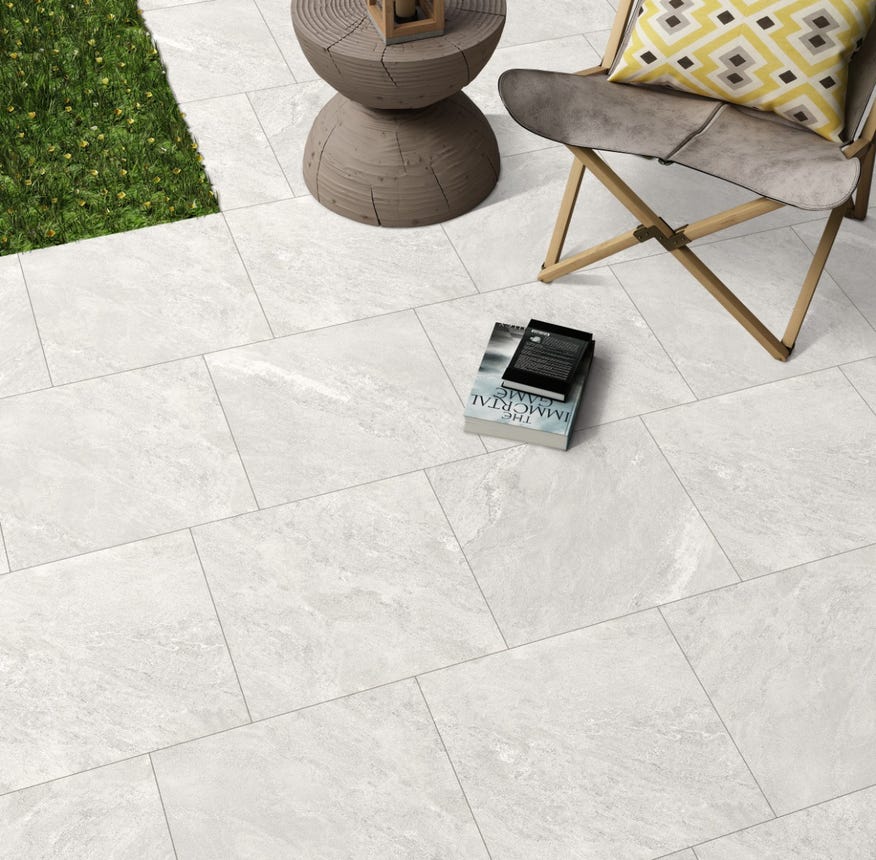
If you’re planning a new patio, driveway, or garden path, choosing between porcelain paving and sandstone paving can feel overwhelming. Both are popular choices, but they each offer unique advantages depending on your style, budget, and intended use.
Here’s a clear, practical guide to the key differences between porcelain and sandstone paving and how to lay each type correctly to achieve a durable, attractive finish in your garden.
What Is Porcelain Paving?
Porcelain paving slabs are manufactured from refined clay, fired at high temperatures to create a hardwearing, low-porosity slab that is resistant to staining, algae growth, and fading. They come in a wide range of colours and finishes, from contemporary grey tones to stone and wood effects.
Key benefits:
- Low maintenance and easy to clean
- Highly resistant to frost, moss, and algae
- Consistent colours and finishes
- Non-porous surface reduces water absorption
What Is Sandstone Paving?
Sandstone paving is a natural stone product formed over thousands of years, offering unique colour variations, veining, and a more traditional appearance. It is porous, allowing water to seep through, and will weather naturally over time, adding character to your outdoor space.
Key benefits:
- Natural beauty with unique patterns and colours
- Provides a traditional or rustic aesthetic
- Can be sealed to help reduce staining
- Offers good slip resistance when wet
The Visual Differences
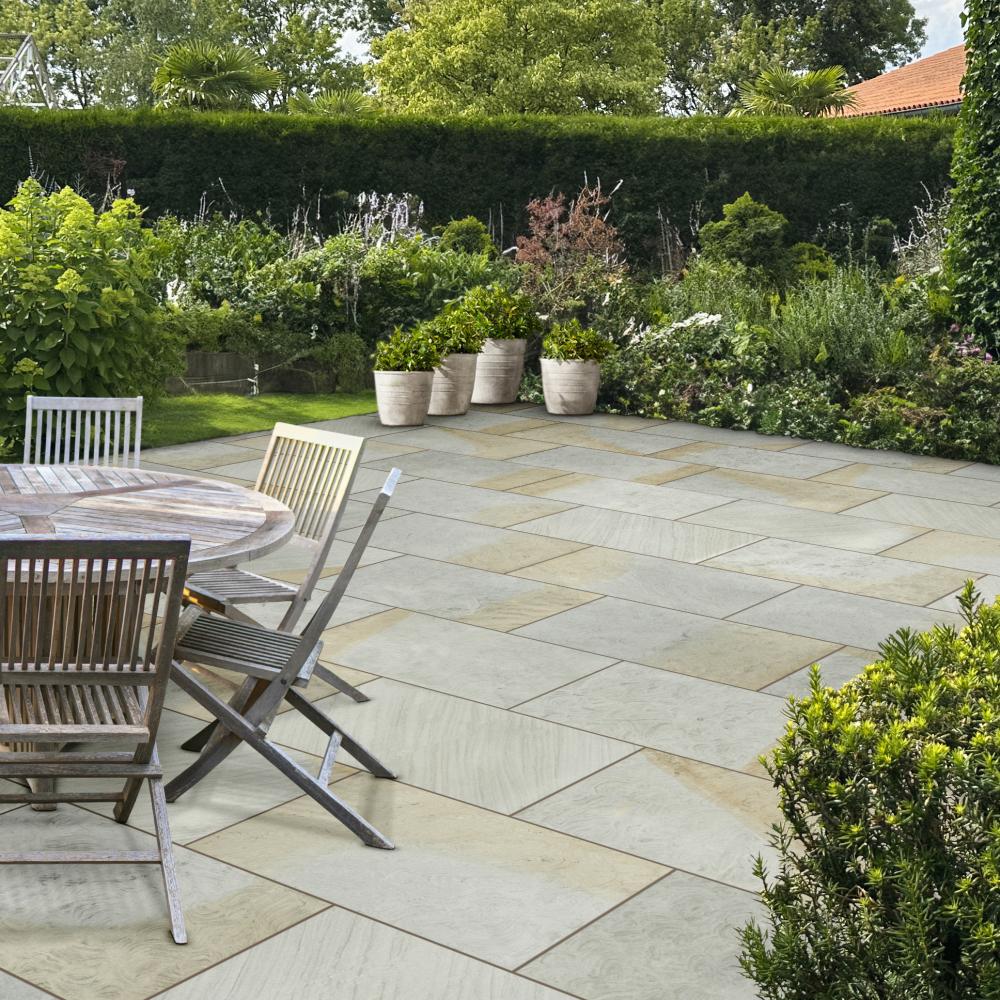
- Porcelain paving often looks more uniform, with modern styles suited to contemporary gardens and outdoor living areas.
- Sandstone paving offers warm, earthy tones that blend seamlessly into natural surroundings, making it ideal for cottage gardens and traditional properties.
How to Lay Porcelain Paving
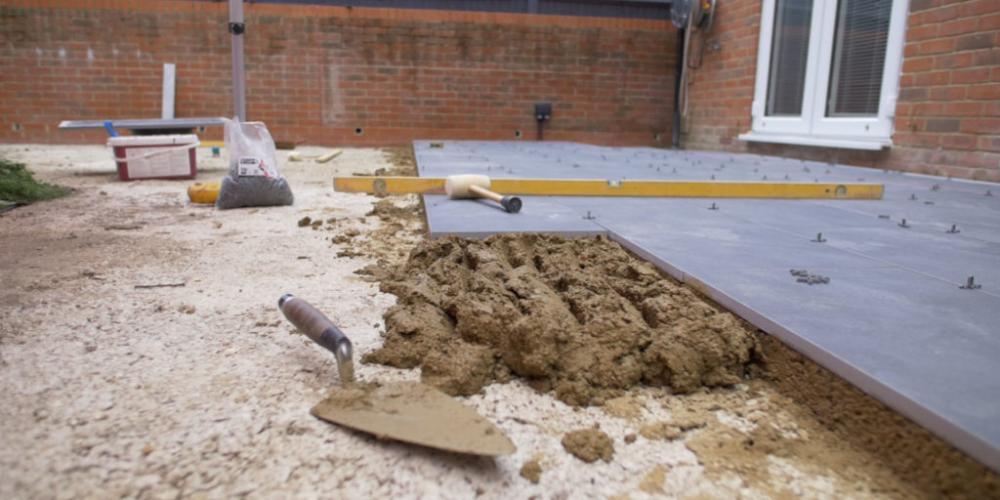
Porcelain paving requires correct installation for durability and safety, as its low porosity means it needs a solid, stable base and appropriate priming to bond.
- Prepare the base
Excavate to the required depth (usually 150-200mm depending on ground conditions) and lay a compacted sub-base of MOT Type 1 or similar. - Apply a full mortar bed
Porcelain slabs should always be laid on a full mortar bed (5:1 sharp sand to cement mix) around 30-40mm thick to prevent movement and cracking. - Use a slurry primer
Back-butter each slab with a porcelain primer slurry to improve adhesion to the mortar bed. - Lay the slabs with a slight fall
Ensure a fall of around 1:80 away from buildings for drainage. - Jointing
Use a suitable outdoor grout or jointing compound, ensuring joints are fully filled to prevent water ingress.
How to Lay Sandstone Paving
Sandstone paving can be laid using both full bed and spot-bedding methods, although a full mortar bed is recommended for stability and to prevent slabs from rocking.
- Prepare the sub-base
Dig down to a suitable depth and lay a compacted MOT Type 1 base layer. - Full mortar bed
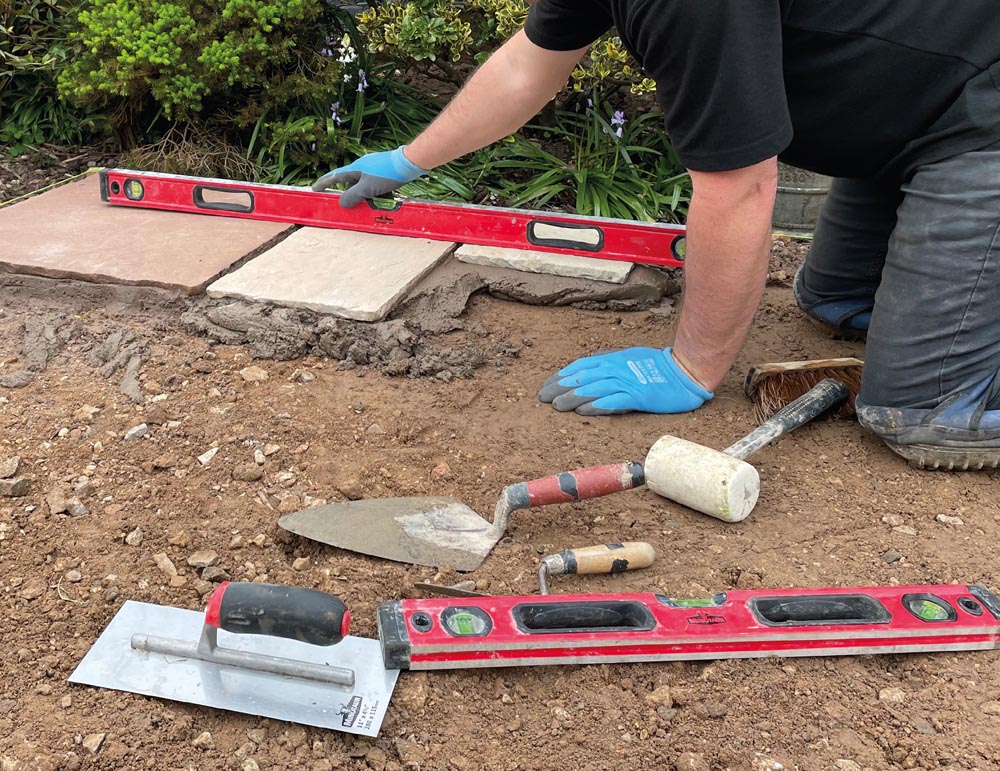
Lay the sandstone slabs on a full mortar bed, using a 5:1 sharp sand and cement mix. - Positioning and levelling
Tap down with a rubber mallet to level each slab while maintaining a consistent joint gap (typically 10-15mm for sandstone). - Jointing
Once the paving has set, joints can be filled with a traditional sand and cement mortar mix or a ready-made jointing compound. - Sealing (optional)
Sealing can enhance colours and help prevent stains but is optional depending on the finish you desire.
Which Paving Should You Choose?
- Choose porcelain paving if you want a low-maintenance, modern look, with high stain resistance and consistent colours.
- Choose sandstone paving if you prefer a natural, traditional appearance with variation in tones and textures.
Both paving options can transform your outdoor space beautifully when installed correctly, providing a long-lasting, functional, and attractive area for relaxing or entertaining.
Visit our Chelmsford branch to view our paving displays and get practical advice tailored to your project. We offer free local delivery and can source specialist paving on request.
