
No products in the Trolley.


How to Fit Timber Sleepers for a Garden Path with Steps
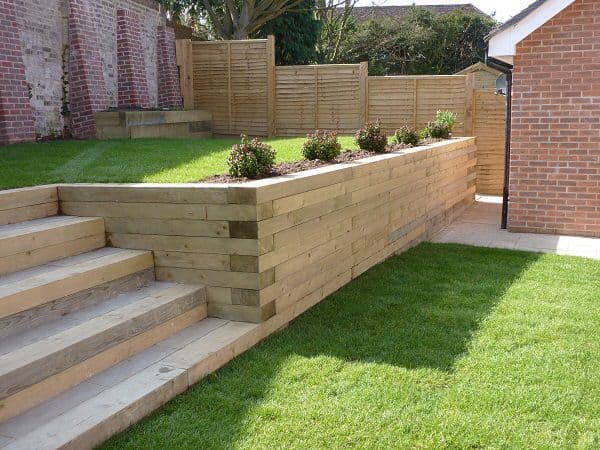
Timber sleepers are an excellent choice for creating garden paths with steps, especially on sloped or uneven ground. They provide a strong, durable, and natural-looking solution that works perfectly in both traditional and contemporary garden designs. Sleeper steps can help improve access around the garden while adding structure and character to outdoor spaces.
Whether you are building a simple pathway through a lawn or creating stepped access on a steep incline, timber sleepers offer a practical and attractive landscaping option.
Why Use Timber Sleepers for Garden Steps?
Timber sleepers are widely used in landscaping because they are sturdy, versatile, and easy to work with. When used for pathways and steps, they help create clear walkways while preventing soil movement on sloping gardens.
Benefits of using timber sleepers for paths and steps include:
✅Strong and durable construction
✅Natural rustic appearance
✅Ideal for sloped gardens
✅Easy to install and maintain
✅Excellent for defining pathways
✅Suitable for gravel, bark, or decorative stone infill
Tools & Materials You May Need
Before starting your project, make sure you have the correct materials and equipment ready.
Materials
- Treated timber sleepers
- MOT Type 1 or hardcore
- Gravel or decorative aggregate
- Timber screws or rebar
- Wooden stakes or support posts
- Weed membrane (optional)
- Tools
- Spade or shovel
- Spirit level
- Tape measure
- Drill and sleeper screws
- Saw (if cutting is required)
- Rubber mallet
- String line
Step 1 – Plan the Path & Steps
Start by planning the route of your pathway and identifying where the steps will be needed. Measure the slope carefully and work out how many steps are required.
Mark the pathway using string lines, spray marker paint, or wooden pegs. Ensure the width of the path is practical for walking comfortably.
A gradual and even step height is important for both safety and appearance.
Step 2 – Prepare the Ground

Remove grass, weeds, loose soil, and debris from the area. Dig out the path and step sections to create a stable base.
For each step, excavate slightly into the slope so the sleeper can sit securely and level.
Compacting the ground before installation will help prevent movement over time.
Step 3 – Install a Solid Sub-Base
Add a layer of MOT Type 1, hardcore, or compacted gravel to the excavated areas. This creates a strong foundation and improves drainage.
Use a spirit level to ensure each step base is level from side to side.
A stable base is essential to prevent the sleepers from shifting once installed.
Step 4 – Position the Timber Sleepers
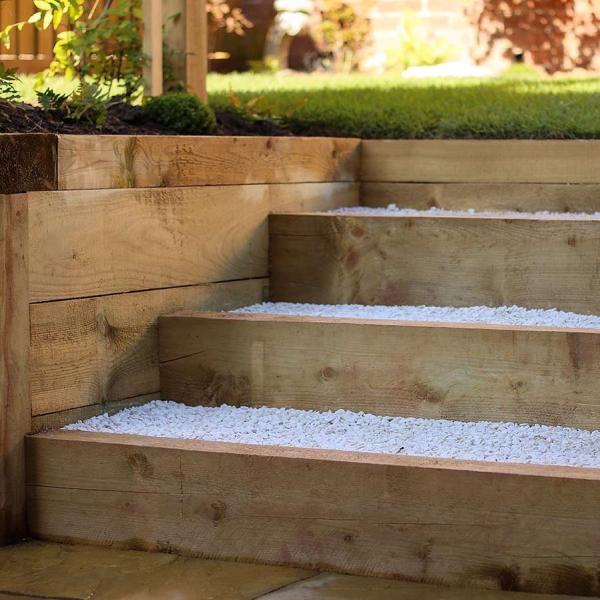
Lay the timber sleepers horizontally to form the front edge of each step. Check alignment and levels carefully as you work your way up the slope.
The sleepers can be secured using:
- Long sleeper screws
- Steel rebar driven through drilled holes
- Timber stakes positioned behind the sleepers
For larger or steeper projects, additional support posts may be required.
Step 5 – Create the Step Treads
Once the front sleeper for each step is secure, backfill behind it using compacted gravel, decorative stone, or soil depending on the finish you want.
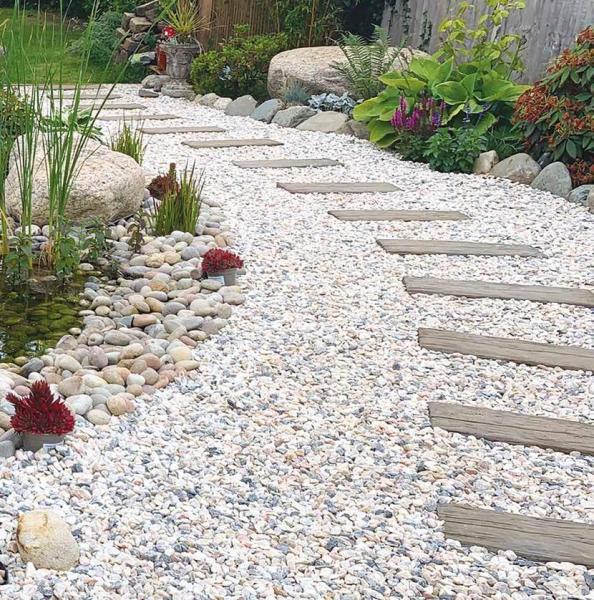
Many garden pathways use:
Gravel
Decorative aggregates
Bark mulch
Paving slabs
Compact stone
Ensure each step tread is firm, level, and drains properly.
Step 6 – Finish the Pathway
Complete the remaining sections of the path between the steps using your chosen surface material.
You may also wish to add:
- Path edging
- Planting borders
- Solar lighting
- Decorative stone features
This helps tie the entire landscaping project together while improving the overall appearance.
Helpful Tips for Sleeper Steps
- Use pressure-treated sleepers suitable for landscaping projects
- Keep step heights consistent for safer walking
- Allow for proper drainage to prevent standing water
- Use galvanised or corrosion-resistant fixings outdoors
- Check levels regularly during installation
- Consider adding a weed membrane beneath gravel pathways
- A Practical & Attractive Garden Solution
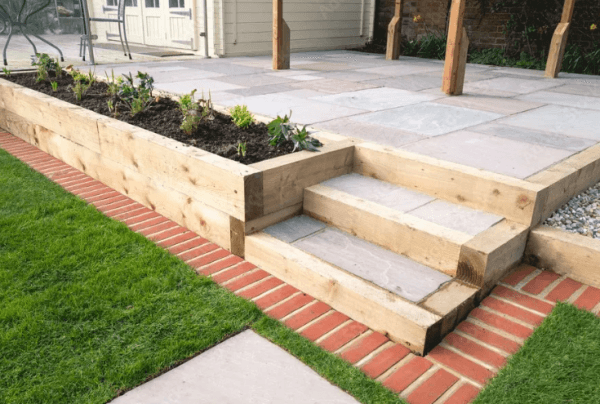
Timber sleeper paths with steps are a practical way to improve accessibility in sloped gardens while creating a stylish landscaping feature. Their natural appearance blends beautifully into outdoor environments and works well alongside lawns, patios, planting areas, and decorative aggregates.
With the correct preparation and installation, timber sleeper steps can provide a long-lasting and visually appealing solution for almost any garden project.
